Logistics operations today are under increasing pressure. Rising labor costs and ongoing workforce shortages meet growing shipment volumes and ever-higher customer expectations. At the same time, fluctuating parcel volumes make capacity planning more difficult, while a wide variety of item sizes and formats adds complexity to handling processes. Limited warehouse and sorting space further restricts expansion, requiring operators to increase throughput without increasing their footprint. Altogether, this results in significantly higher process complexity and the need for more efficient, scalable solutions.
Manual picking is repetitive, unpopular with workers, and prone to errors – and it can’t keep up with today’s processing demands. The right automation technology can significantly improve both speed and efficiency. However, each application, from case picking, sorting and inducting to labeling, comes with its own specific requirements. The question is no longer whether to automate, but which technology best fits the task.
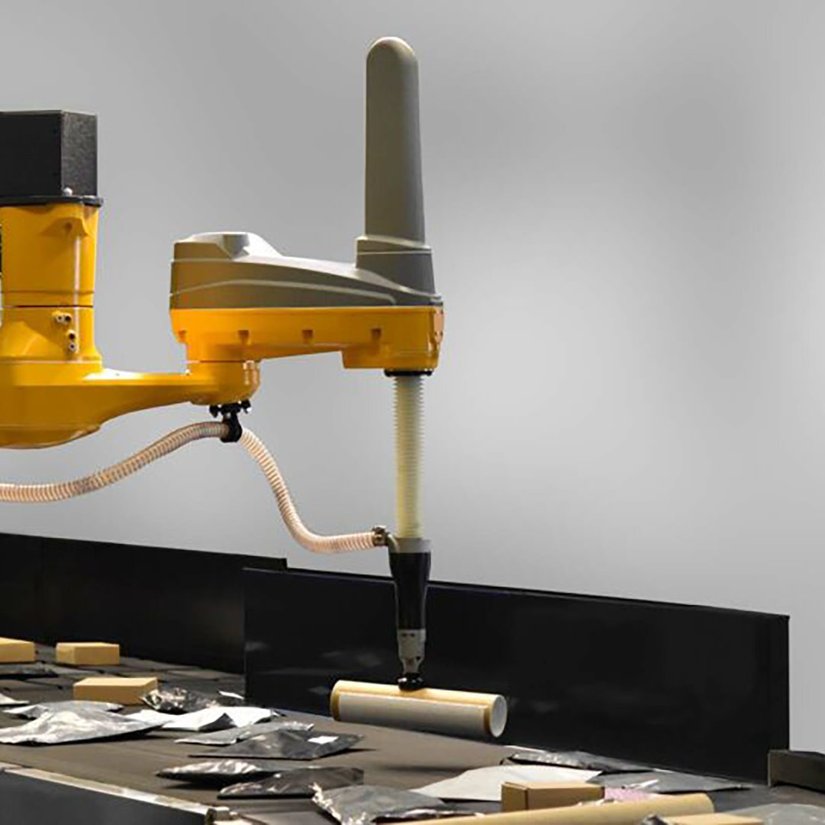
Dynamic picking robots combine advanced 3D vision, AI-based object recognition, and adaptive grippers to reliably handle disordered, irregular, and misaligned items. This allows them to take on tasks that were previously too complex for cost-effective automation.
Flexibility and precision – Bin Picking
Dynamic picking robots automate bin picking by accurately identifying and securely picking up and moving items. They adjust their movements in real time to accommodate variations in size, shape, and position.
Using intelligent sensors and AI-based vision systems, they reduce errors while increasing picking speed. Automated workflows enable continuous material flow without manual intervention, freeing employees from repetitive and physically demanding tasks and allowing them to take on higher value work.
Quality and quantity – Sorting items
In traditional picking systems, overlapping, damaged, or non-compliant items often require manual intervention to prevent jams or errors. Advanced robotics unlock high volume and high accuracy at the same time.
These systems use AI and continuous learning to detect size, shape, and material – even in fast-moving, unstructured streams. They identify the optimal grip point and pick items at the right moment.
Items that cannot be processed are automatically detected and removed, preventing disruptions further downstream.
Precise timing – Loading inductions
Loading inductions is another critical logistics task. Individual shipments need to be transferred from an unsorted main flow to downstream systems with the correct orientation and placement. Shipment characteristics such as weight, packaging type, and dimensions can vary widely.
Dynamic picking robot systems with integrated 3D vision handle this by identifying each item, determining its position, and calculating the optimal gripping strategy. By synchronizing robot motion with conveyor speed and position in real time, these systems achieve consistently high throughput and precise placement – with reduced misfeeds.
Continuous material flow – Inducting dynamic conveyor systems
When loading moving conveyor systems or sorters, the target is constantly in motion. This requires real-time detection of item position and orientation, along with intelligent software to place items accurately into designated locations.
Beyond sorting, automation can also improve processes such as labeling, where precision and speed are critical. As the number of applications grows, a unified solution becomes essential, so the user doesn’t need to manage multiple specialized systems.
Körber VarioPick: One solution, endless possibilities
Automating manual picking processes is a key driver of productivity, quality, and scalability in logistics. Whether for bin picking, sorting, induction loading, conveyor transfer, or labeling, users benefit from stable throughput, lower error rates, and fewer manual interventions. System availability also improves, as problematic items are detected and removed early in the process.
Instead of relying on multiple custom solutions, Körber’s VarioPick offers a standardized yet highly flexible platform to automate a wide range of applications. As a stand-alone system, it includes all the necessary technologies to detect item characteristics, determine optimal grip, and handle items correctly, depending on the application –whether picking, reorienting, removing, or placing them.
From its advanced gripper design to AI-driven learning capabilities, this plug-and-play solution enables fast deployment – often within 24 hours – regardless of the specific use case. The result is higher throughput, minimal errors, and reduced dependence on labor availability.